2026 ESG Outlook: What You Should Be Planning For
Last updated on January 8, 2026 | 6 min read
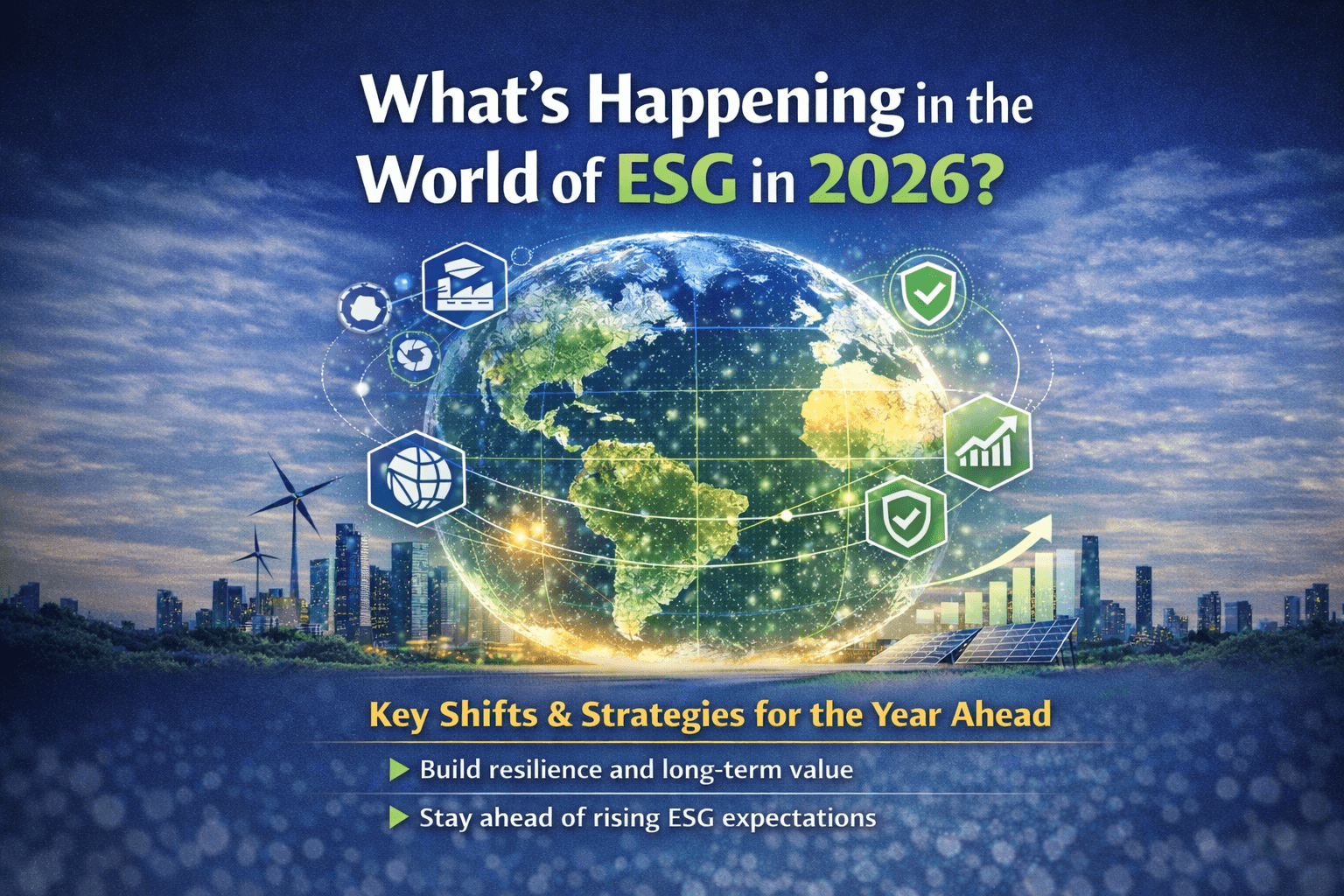
As we step into 2026, ESG is no longer a peripheral theme in business conversations, it is central to how companies create value, manage risk, and deploy technology. Across sustainability trends, regulatory pressures, and artificial intelligence (AI) innovation, 2026 promises to be a year where ESG principles are deeply embedded in corporate strategy and financial markets. Below we will talk about 5 trends that will be shaping ESG in 2026.
1. Market Forces Drive the Energy Transition - Beyond Policy Cycles
Even as political consensus on climate policy wavers in some regions, the economics of the energy transition continue to accelerate. Investors are increasingly backing commercially viable clean technologies - from renewables to electric mobility - as cost declines and scale efficiencies make these solutions competitive without depending entirely on incentives. Companies whose business models align with scalable low-carbon innovation are being rewarded by markets, reinforcing the idea that sustainability isn’t just ethical, it’s financially material (MSCI).
What this means for 2026: Investors will increasingly embed climate and transition risks into portfolio decisions, and businesses that fail to adapt to these evolving capital flows risk being sidelined. This trend makes clarity and accuracy in ESG reporting more important than ever and it’s exactly where Triple I can help. With AI-powered automation that turns raw sustainability data into real insights, businesses can present a clear picture of their emissions performance and environmental strategy to investors and stakeholders alike.
2. Regulations Evolve - But Complexity Brings Opportunity
The landscape of ESG reporting and compliance is shifting fast. In Europe, reforms like the Corporate Sustainability Reporting Directive (CSRD) and related frameworks (EU Taxonomy, SFDR) have seen provisional recalibrations that both simplify and complicate compliance requirements. This regulatory “velocity” where rules change even as implementation begins creates operational uncertainty for firms preparing for 2026 disclosures (dydon.ai)
For many organizations, this shifting landscape means a scramble to keep up or falling behind. ECOHUB™ provides an advantage by aligning data with diverse global standards and automating audit-ready reporting. This allows teams to stay ahead of compliance mandates and focus on sustainable impact rather than manual overhead.
3. Artificial Intelligence: A Key ESG Enabler (and Risk Manager)
AI’s role in 2026 is foundational to ESG evolution. Three key forces will shape this:
AI for Compliance and Reporting: Traditional compliance systems struggle with frequent regulatory changes. AI-powered sustainability reporting platforms that automate data extraction, standardize analytics, and adapt to multiple frameworks are becoming indispensable in managing ESG disclosure efficiently and cost-effectively (dydon.ai)
AI for Sustainability Value Creation: According to business technology forecasts for 2026, companies are expected to tie AI deployments directly to sustainability outcomes. For example, using AI to optimize energy use, reduce emissions, and trace value chain impacts. This marks a shift where AI isn’t just reducing cost, it is amplifying ESG value (PwC).
Responsible AI as Governance Imperative: As AI systems proliferate, there’s growing emphasis on Responsible AI practices that ensure transparency, fairness, and ethical use. In 2026, many firms will be formalizing governance and risk frameworks that treat Responsible AI as integral to ESG performance, not as an afterthought (PwC).
The net result of these forces? AI becomes both a tool and a lens for ESG success, enhancing reporting accuracy, revealing risks faster, and enabling strategic decisions rooted in sustainability analytics.
With ECOHUB™, every piece of ESG data from carbon metrics to HR and governance indicators is automatically cleaned, classified, and aligned to relevant standards, enabling real-time dashboards and audit-ready disclosures with minimal manual work.
4. Physical Climate Risk and Resilience Become Investment Themes
Investors aren’t just focused on reducing emissions anymore they’re grappling with the material impacts of climate hazards on assets. For instance, extreme weather and physical risk scenarios are reshaping how infrastructure and private assets are valued. The integration of AI-driven climate scenario analysis into investment due diligence is making physical risk a quantifiable and investable metric (MSCI).
In 2026, resilience strategies from climate-proofing infrastructure to stress-testing portfolios under extreme scenarios will transition from defensive tactics to sources of competitive advantage.
5. Investors Demand Clarity, Not Complexity
One of the most striking shifts on the ESG horizon is a pivot from exhaustive data to meaningful, financially relevant metrics. Both regulators and investors are pushing companies to disclose what materially impacts performance, risk, and long-term value, not just broad sustainability outputs. This evolution favors clarity, comparability, and data quality over volume (MSCI).
In 2026, the emphasis in ESG disclosure shifts decisively from quantity to quality where the depth of reporting holds equal or greater significance. Forward-thinking companies are therefore adopting integrated systems and processes that convert disparate ESG data into strategic, actionable insights. Organizations that effectively communicate their sustainability strategies in terms resonant with financial stakeholders stand to gain enhanced investor confidence and potentially reduced cost of capital.
Triple I exemplifies this approach. By unifying data across multiple sources and automating disclosures compliant with global standards, it enables organizations to articulate a credible and compelling narrative of their sustainability progress. This fosters enduring trust among investors, regulators, and customers.
Final Thought: ESG in 2026 Is Strategic, Not Optional
At Triple I, we believe 2026 marks a defining shift for ESG. It isn’t a box to check anymore, it’s a dynamic force reshaping markets. From evolving regulation and AI-powered compliance to investor demand for meaningful climate risk data, the future of sustainable business is about integration, agility, and strategic foresight. Companies willing to lean into these trends and deploy technology with purpose will not only navigate regulatory complexity but turn ESG into a competitive differentiator. The year ahead isn’t just about compliance or reporting, it’s about building resilient, future-focused enterprises that thrive in a world where sustainability is central to value creation.
That’s exactly how we’ve built Triple I. Our ECOHUB™ is designed to help companies stay ahead of regulatory change, automate ESG reporting across global frameworks, and transform complex sustainability data into clear, audit-ready, decision-grade insights. We don’t just help organizations report on ESG, we help them use ESG data to drive strategy, manage risk, and build long-term resilience.
Contact us to see how we can help you turn ESG from a checkboxes to a strategic advantage.