The $5 Trillion Green Economy: Why ESG Data Is Now a Business Imperative
Last updated on January 28, 2026 | 4 min read
The global green economy has officially crossed a major milestone.
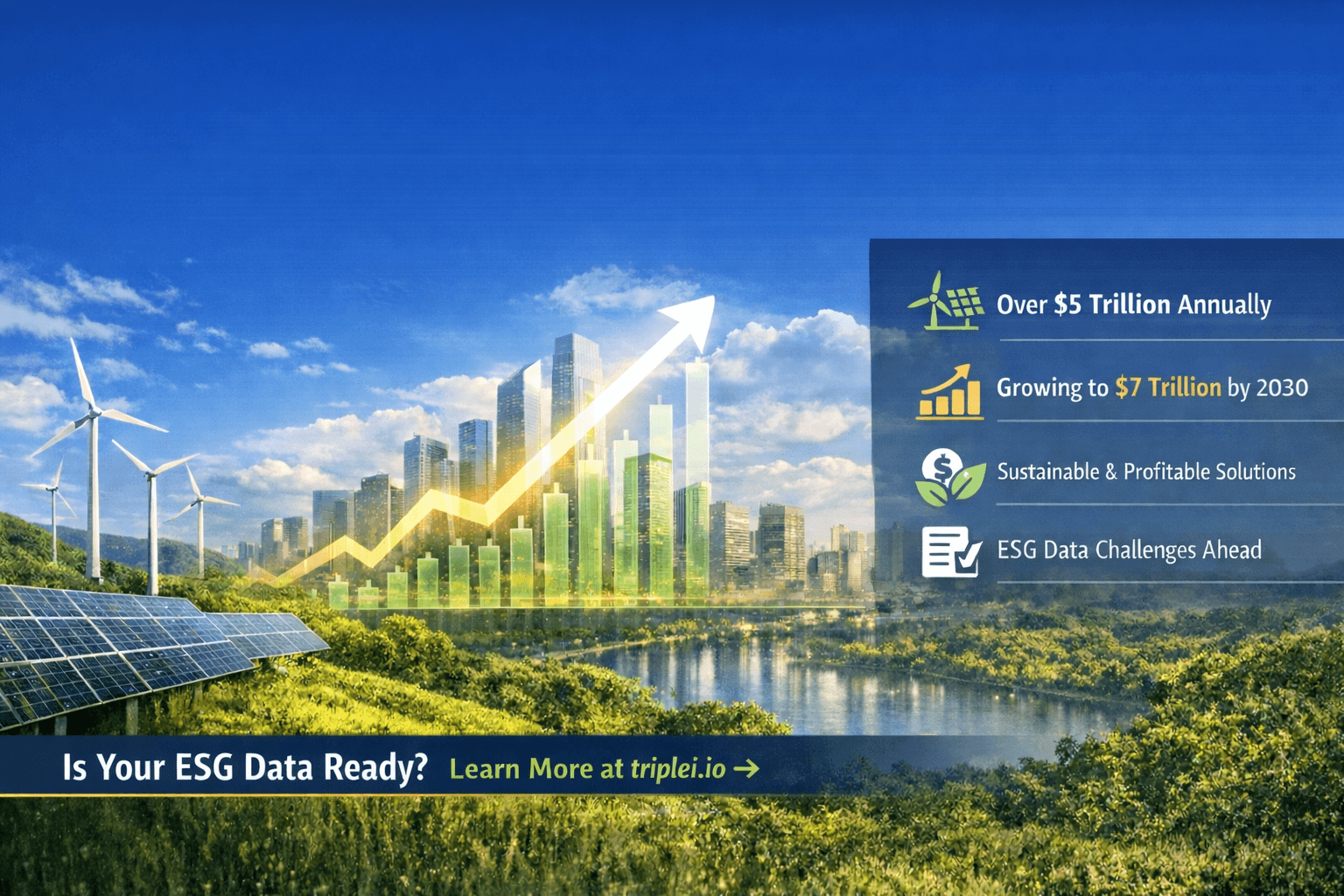
According to a recent report from Boston Consulting Group (BCG) and the World Economic Forum, the green economy is now worth over $5 trillion annually and is projected to grow to $7 trillion by 2030. This positions sustainability-driven solutions as one of the fastest-growing segments of the global economy, rivaled only by technology.
This growth is being fueled by sectors such as renewable energy, sustainable mobility, circular economy solutions, and carbon management. What’s most notable, however, is that many of these solutions are no longer niche or experimental they are increasingly cost-competitive, scalable, and profitable.
From Sustainability Goals to Economic Opportunity
For years, sustainability was often viewed as a regulatory burden or reputational initiative. That narrative is changing rapidly.
The green economy’s expansion signals a fundamental shift:
Sustainable revenues are growing faster than conventional ones
Climate-aligned solutions are attracting more capital
ESG performance is becoming a key differentiator for customers, investors, and partners
In other words, sustainability is no longer just about doing the right thing, it’s about staying competitive.
The ESG Data Challenge
Despite the opportunity, many organizations still struggle with ESG execution. The challenge isn’t intent, it’s data.
Companies face:
Fragmented ESG data across teams and systems
Increasing regulatory complexity and reporting requirements
Manual, time-consuming reporting processes
Limited visibility into performance and progress
Without reliable, structured ESG data, it’s difficult to measure impact, ensure compliance, or turn sustainability into a strategic advantage.
Turning ESG Complexity Into Clarity
This is where Triple I helps.
Triple I’s AI-powered ESG platform is designed to simplify ESG data collection, management, and reporting. By centralizing emissions, HR, governance, and operational data, organizations can move from spreadsheets and manual workflows to audit-ready, compliance-aligned insights faster and with greater confidence.
Instead of reacting to ESG requirements, companies can:
Improve data accuracy and transparency
Reduce reporting time and operational burden
Gain actionable insights to support decision-making
Align sustainability performance with business strategy
The Green Economy Is Already Here
The $5 trillion green economy is not a future possibility, it’s a present reality. As sustainability becomes a core driver of growth, organizations that invest in strong ESG data foundations will be best positioned to capture its value. The question is no longer whether sustainability matters, it’s whether your data is ready.
👉 Learn how Triple I can help you turn your ESG data into a strategic advantage:
https://triplei.io